Buying a home in Denver for the first time: a step-by-step guide for 2026

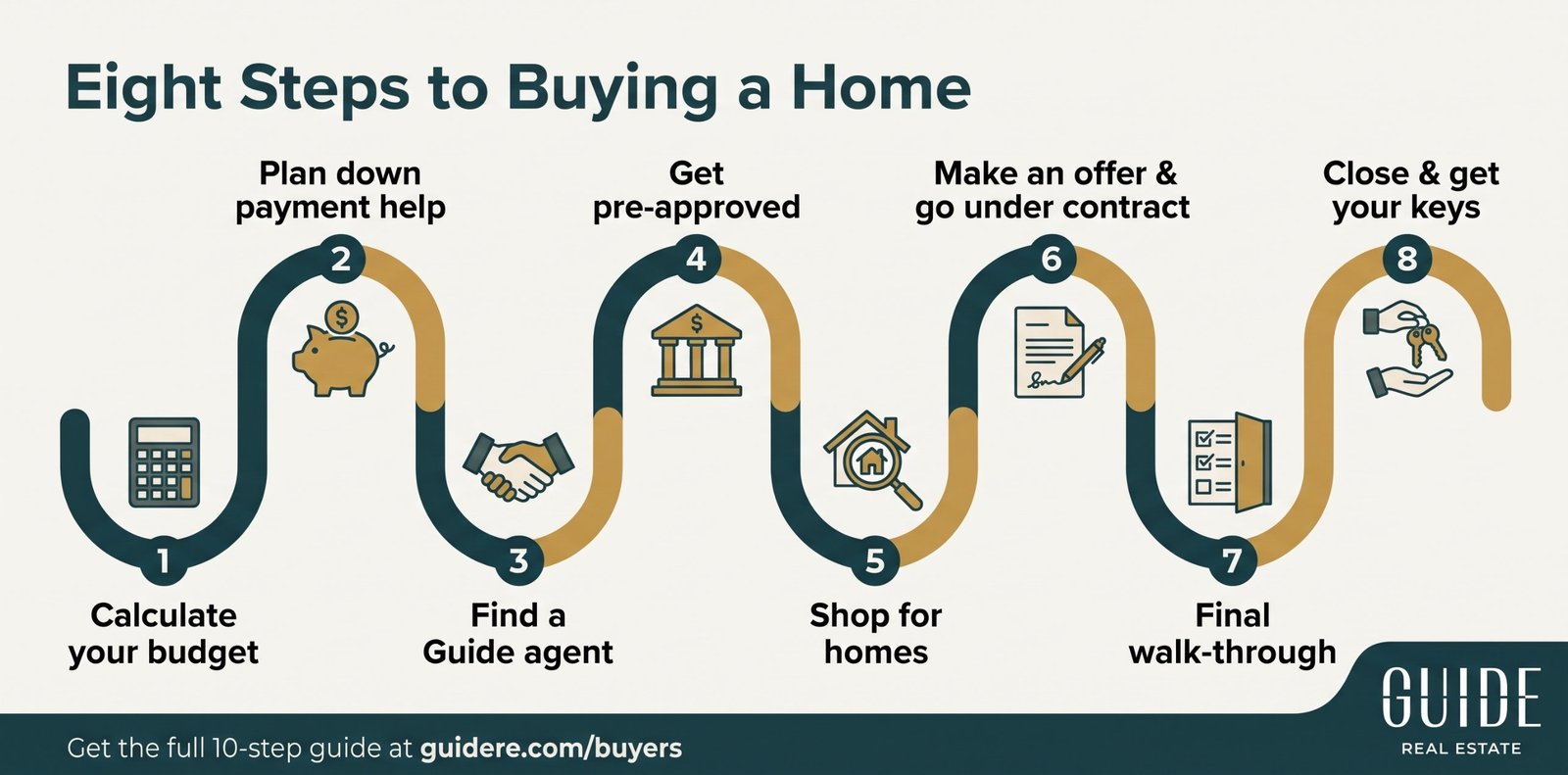
Buying your first home in Denver comes down to a few decisions made in the right order: settle on a monthly payment you're comfortable with, get preapproved, find out whether you qualify for down payment help, sign an agreement with a buyer's agent, then shop knowing the deadlines in Colorado's purchase contract. Here's each step, with the details first-time buyers ask us about most.
A lender will tell you the most you can borrow. That number is often more than you'll want to pay every month. Build a household budget first and include the costs renters don't see: property taxes, homeowners insurance, HOA dues, utilities, trash and water, and maintenance. Newer neighborhoods may also have a metro district tax on the property tax bill.
At 7.24%, Freddie Mac's average 30-year rate for the week of October 29, 2026, principal and interest on a $400,000 loan comes to about $2,726 a month before taxes and insurance.
A prequalification is a quick estimate. A preapproval means a lender has checked your income, assets and credit. Sellers take preapproved buyers more seriously, and you'll know which loan programs you qualify for. Ask your lender to run the numbers at a few price points so you can see how the payment changes.
Colorado has real programs for first-time buyers, and many people don't check whether they qualify.
CHFA (Colorado Housing and Finance Authority) offers a down payment assistance grant of up to 3% of your first mortgage, capped at $25,000, with no repayment. It also offers a second mortgage of up to 4%, capped at $25,000, repaid when you sell, refinance or pay off the first mortgage. Both are used with a CHFA first mortgage through a participating lender, and CHFA recommends taking its homebuyer education class early.
metroDPA, sponsored by the City and County of Denver, provides an interest-free deferred second mortgage based on a percentage of your first mortgage, for homes in participating Front Range cities and counties. The city lists household income up to $195,600 and a credit score above 640. Buying inside the City and County of Denver? The city suggests asking your lender about its Denver Advantage program.
Income limits, rates and terms change, so confirm the current details with a participating lender before you count on any program.
Since August 2024, MLS rules require a written agreement with a buyer's agent before you tour homes together. In Colorado that's a Commission-approved form. It spells out what the agent will do and how they'll be paid, and compensation is negotiable. Ask how a seller-paid concession could cover some or all of it.
Pick an agent who explains things without rushing you. At Guide, new agents work under a mentor through their first five transactions, so you get more than one experienced set of eyes on your deal.
Search homes in your price range, go to open houses, take notes and visit neighborhoods at different times of day. Guide's neighborhood guides and the Denver suburbs comparison can help you narrow the map. Look past the staging: check water pressure, look under sinks, notice the age of the furnace and water heater. For older Denver homes, plan on a sewer line scope during inspection, and radon testing is common in Colorado.
Colorado uses the Commission-approved Contract to Buy and Sell Real Estate. It sets deadlines for earnest money, inspection objections, appraisal, loan approval and title review. Missing a deadline can cost you options, so keep the calendar close.
In September 2026, almost 64% of Denver-area sales included seller concessions, according to the Colorado Association of REALTORS. Asking for help with closing costs or a rate buydown is normal right now.
Your inspection objection is your chance to ask the seller to repair, credit or adjust the price for problems the inspector finds. Your lender orders the appraisal. If it comes in low, the contract's appraisal deadlines give you room to renegotiate or, depending on how the contract is written, walk away.
The title company handles the closing. Do a final walkthrough, bring the funds the way your title company instructs (wire fraud is common, so call to verify instructions by phone), sign, and get your keys.
Some conventional loans for first-time buyers allow 3% down, and FHA loans allow 3.5% with qualifying credit. Down payment assistance can cover part of that. You'll also need money for inspection, appraisal and closing costs.
Many programs count you as first-time if you haven't owned a home in the past three years. Each program sets its own definition, so check the one you're applying for.
It's negotiable and written in your buyer agreement. Sometimes the seller agrees to pay part or all of it as a concession.
Buyers have room to negotiate right now. In September 2026, 80% of Denver-area sales involved a price cut, a seller concession or both, according to the Colorado Association of REALTORS. Whether it's right for you depends on the payment and how long you plan to stay.
Start with Guide's free 10-step buyer guide, or talk with a Guide agent about your first purchase.
Stay up to date on the latest real estate trends.


Commute, school districts, parks and housing in four Denver suburbs, side by side
At Guide Real Estate, we believe in lifelong learning, collaboration, and growth. We commit to being better tomorrow than we are today. Our commitment to being better tomorrow than we are today begins with serving you. How can we help?